
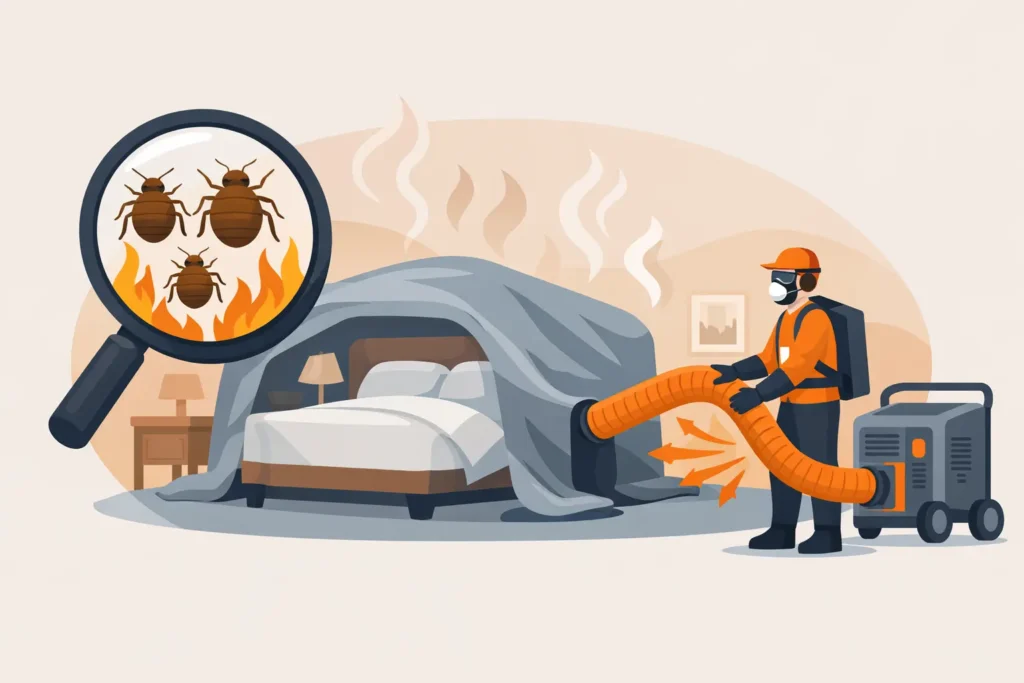
A bed bug sighting can turn ordinary routines into a source of stress. You may start checking mattress seams, avoiding your bedroom, or worrying that every bite means the problem is getting worse. Bed bug heat treatment is one of the most reliable professional options because it targets bed bugs where they hide, not just the ones that happen to be visible.
For homeowners, tenants, landlords, and business operators, the appeal is clear: a properly planned heat treatment can address eggs, young bed bugs, and adults in a single service day. But it is not a matter of turning up the thermostat and hoping for the best. Effective treatment depends on thorough inspection, careful preparation, professional equipment, and technicians who monitor temperatures throughout the space.
How Bed Bug Heat Treatment Works
Bed bugs are highly vulnerable to sustained high temperatures. During a professional treatment, technicians use specialized heaters and high-powered fans to raise the temperature in the affected room or property to a level lethal to bed bugs. The heat must reach not only open areas but also the difficult places bed bugs prefer: inside furniture joints, behind headboards, along baseboards, within cracks, and around mattress piping.
The key word is sustained. A room may feel hot quickly, but bed bugs tucked inside dense furniture or wall gaps need enough time at the required temperature for the treatment to work. Professional teams place sensors in strategic locations and adjust heaters and airflow as needed. This monitoring helps prevent cold spots, which can allow bed bugs to survive.
Heat is especially useful because bed bug eggs are often resistant to many conventional insecticide applications. When the proper temperature is achieved and maintained, heat can kill eggs as well as mobile bed bugs. That is why it is often chosen when a fast, whole-room solution is needed.
Why Inspection Comes Before Treatment
Not every itchy bite is caused by bed bugs, and not every small dark mark on bedding is evidence of an active infestation. A proper inspection identifies the pest, locates the activity, and determines how far it may have spread. This step matters because bed bugs can move beyond the bed into sofas, office chairs, luggage, curtain folds, and neighboring rooms.
A technician will typically inspect sleeping and resting areas first, then look at nearby furniture, wall edges, electrical outlets, and other potential harborages. In apartments, condominiums, and shared commercial spaces, the inspection may also consider adjoining units or rooms. Treating only the obvious location can lead to repeat activity if the source is elsewhere.
The inspection also helps determine whether heat is the best fit. For a contained infestation in a bedroom, localized heat treatment may be practical. If activity is spread across multiple rooms, the treatment plan may need to cover a larger area or combine heat with targeted follow-up measures. Honest advice should reflect the actual conditions, not a one-size-fits-all package.
What to Expect on Treatment Day
Professional bed bug heat treatment requires planning, but it does not need to become overwhelming. Before the appointment, you should receive clear preparation instructions tailored to your property. These instructions protect heat-sensitive belongings and give technicians safe access to the areas that need treatment.
Items such as aerosol cans, candles, cosmetics that may melt, medication, certain plants, and delicate electronics may need to be removed or handled according to the technician’s guidance. Pets must be taken out of the treatment area. Fish tanks and other sensitive setups require special attention, so mention them during booking rather than making assumptions on the day.
Clothing, linens, and personal items are handled differently depending on the treatment plan. Some belongings may remain in the room so heat can reach any bed bugs inside them, while others may need to be bagged or processed separately. Avoid moving unprepared items into another room, a car, or a friend’s home. That can spread bed bugs to a new location.
During treatment, occupants cannot remain inside the heated area. Technicians set up equipment, monitor temperatures, and use fans to circulate heat through furniture and hidden spaces. The service can take several hours, depending on room size, clutter level, construction, and the extent of the infestation. A reliable provider will explain the expected timing before work begins and keep you updated if conditions require an adjustment.
Preparation Is Part of the Result
Heat treatment is powerful, but preparation plays a major role in its success. Clutter creates insulation and blocks airflow. A packed closet, piles of laundry, or tightly stacked storage can create cooler pockets where bed bugs may avoid lethal temperatures.
That does not mean you need to throw away everything you own. In fact, disposing of furniture without a plan can spread bed bugs through hallways, elevators, or common disposal areas. Instead, follow the preparation checklist provided by your pest control team. The goal is to make the room accessible and allow heat to circulate, not to create unnecessary disruption.
If you live in a multi-unit property, tell your landlord or property manager as soon as bed bugs are confirmed. Early communication can help protect neighboring units and clarify access arrangements. For offices, hotels, clinics, or staff accommodations, a discreet but prompt response helps limit disruption and gives the treatment team the time needed to assess adjacent areas.
Heat Treatment Compared With Other Options
Heat is not the only bed bug control method. Targeted insecticide treatments, steam applications, mattress encasements, interception devices, and follow-up inspections can all have a place in a complete plan. The best approach depends on the property, infestation level, budget, access, and how quickly the space needs to return to normal use.
Heat often has an advantage when speed matters. It can treat a large number of hiding places during one scheduled service and does not leave a chemical residue on surfaces. That said, it can cost more upfront than a basic spray treatment, and it requires more preparation and temporary vacancy during the service.
Chemical or integrated treatments may be appropriate where heat-sensitive materials cannot be moved, where an infestation is very limited, or where ongoing monitoring is needed. In some cases, combining methods offers the strongest protection. For example, a heat treatment may be followed by targeted work in potential entry points or adjacent areas where reinfestation is a concern.
How to Avoid Reinfestation After Treatment
A successful treatment solves the current infestation, but prevention reduces the chance of bringing bed bugs back. Bed bugs are often introduced through travel, secondhand furniture, visitors’ belongings, or items moved between infested and non-infested spaces. Their presence is not a sign that a home or business is unclean.
After treatment, inspect luggage after travel and keep it off beds and upholstered furniture until it has been checked. Be cautious with used mattresses, bed frames, sofas, and discarded furniture. If you purchase secondhand items, inspect seams, joints, labels, and crevices before bringing them indoors.
For properties with frequent turnover, such as rental units or staff housing, regular inspections can catch activity early. The earlier bed bugs are identified, the more contained and straightforward treatment is likely to be. Keep any follow-up appointment recommended by your technician, even if you no longer see bites or insects.
When to Call a Professional
Call for an inspection if you find live bugs, shed skins, tiny pale eggs, dark spotting near a bed or sofa, or repeated unexplained bites after sleeping. It is also wise to get professional advice when you have tried store-bought products without results. Over-the-counter foggers and random spraying can drive bed bugs deeper into hiding and make the infestation harder to treat.
A responsive pest control team should give you practical answers: what was found, where activity is concentrated, which treatment is recommended, what preparation is required, and what happens after service. At WTG Pest Control, the focus is on clear assessment and aftercare guidance, so you know what to expect before the work starts.
If bed bugs are disrupting your sleep or affecting a tenant, guest, or employee, acting early is usually the least stressful option. A careful inspection and a well-managed treatment plan can help you reclaim the space with confidence.